We have avoided repetitions of any sort in the matter on astronomical telescopes. However, if you do come across any repetitions, do bear with us.
astronomical telescopes For Your Reading Pleasure
A Look Into The Cosmos: How Telescopes Work
Once Galileo discovered the telescope, there was a sudden leap from fantasy and legends to reality. And reality was so much more fantastic than the world had ever dreamed of. So quickly, planets and stars which were specks in the sky, some of them not even visible to the naked eye, came close and shared their secrets with us. It was a whole new voyage of discovery into the heavens and the wonders that were in it. It was the bridge that connected the world with the rest of the universe. It was the connection between man and space.
Since Galileo gifted the world with this wonderful instrument, technology has driven it along to becoming very hi-tech and very modern. There are two types of telescopes that are available today. They are the Galileo or refractor telescope and the Newton or the reflector telescope. The basic difference is that the refractor telescope uses an objective lens. This makes the light bend towards the eyepiece. The reflector telescope on the other hand uses a mirror which reflects the light towards the eyepiece. Both are available so how do you know which one to buy?
First of all, whichever telescope you decide on, do not go by how much it magnifies as this is no criterion. Viewing large hazy pictures does not mean much. There are three factors you have to take into consideration when you are shopping for a telescope. The most important of these is the aperture. This is the opening through which the light comes in so a larger one will mean better clarity and better details. Next comes the resolution. This is what enables the telescope to give you an image with details. Go for one with a higher resolution. This together with a bigger aperture will ensure good images. The third factor is the focal length. This is the distance between the optical center of the eyepiece and the optical center of the mirror or the lens. This is what is responsible for the magnification. A longer focal length means better magnification.
Besides these, a telescope also has accessories. Let's take a look at what are the important ones and what are the ones it would be good for you to buy. Very essential are filters which reduce glare and make it easier to view objects which are distant. Also important is the Barlow lens which comes in different sizes and must be carefully chosen to fit the eyepiece. The eyepiece of course is crucial to the telescope. They come in various sizes and you can add more than one to see even very distant objects. You should also choose your mounts carefully for this is what the telescope stands on. It should be stable to give you the best possible view without any vibration or shaking.
Owning a telescope is like going on a voyage of discovery to worlds unknown, while you are standing in one place. It is a window to the whole universe and as you gaze through it, you feel you're a part of that too.
About the Author
More information about how telescopes work
how telescopes work
telescopetech
astronomical telescopes Products we recommend
DECK CLAMP BLACK
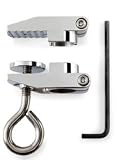
DECK CLAMP BLACK
The Incredible Adjustable Deck Clamp adjusts to any size deck rail. Provides anchoring to the Deck Pole (#DP and #DCH) for superb stability. Fits 1" OD poles.
Synthesis Imaging in Radio Astronomy II: Conference Series Volume 180 (Astronomical Society of the Pacific Conference Series, V. 180)
Large Brass Telescope with Tripod

Large Brass Telescope with Tripod
Galileo is credited with inventing the first refracting telescope. Through his understanding of how light passes through a lens, he was able to construct a device that focused on an image and enabled the user to see an object as though it were brighter, clearer, and closer.
This telescope has an extendable tripod and removable barrel scope. Additionally, a spotter scope located on top will help when looking up at the stars. This high quality maritime style telescope is fully functional with a scope length of approximately 40" long and can be extended to stand about 60" high. Lens cap is attached by a decorative chain.
The magnification is 32x.
SK TOOL - SKT90343 - 10LB TELESCOPE MAGNET

SK TOOL - SKT90343 - 10LB TELESCOPE MAGNET
SK TOOL - SKT90343 - 10LB TELESCOPE MAGNET
10X 25mm AMBER LENS HAND SCOPE IN CAMO
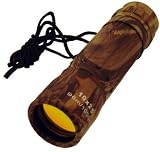
10X 25mm AMBER LENS HAND SCOPE IN CAMO
Our short range military style telescope. Made of ABS costed with weather-resistant rubber in wooden camo color. 10X zoom - with focus adjustment found on the eye-piece. Comes in 25 mm amber-coated glass lens - nylon strap - and 4''x4'' lens cleaning clothe included. Overall length of the scope is about 4 1/2'' with 1'' diameter. Package Dimension: 4.75'' X 1.5'' X 1.5''
The Jouney to Palomar
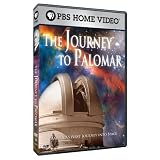
The Jouney to Palomar
The film traces the story of the Chicago-born astronomer George Ellery Hale, considered the father of astrophysics, as he struggles personally and professionally to build the greatest telescopes of the 20th century at the Yerkes and Mount Wilson Observatories, and finally the 20-year effort to build the million-pound telescope on Palomar mountain beginning in the 1930s. Hale's observatories revolutionized our understanding of the universe.
Gerber 22-80126 Cornea Flashlight
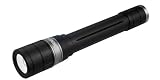
Gerber 22-80126 Cornea Flashlight
This stylish, rugged metallic flashlight features adjustable beam functionality, an anodized aluminum housing, and boasts a 40% longer burn time and a 15% longer effective range than it's closest competitors. The adjustable beam offers full illumination at its center (no 'black hole'). The rear tail cap has a lanyard hole and houses the on/off button. Powered by two AA batteries. Features: Rear toggle switch Anodized aluminum body Adjustable beam High output L.E.D. No "black hole" in wide beam mode Specs: Light Source Type: L.E.D. Light Source Quantity: 1 Light Source Life: 50,000 hours Output Color: White Output Color Modes: White Output Lumens: 18 Illumination Distance: 230 Housing Material(s): Anodized aluminum Limited Lifetime Warranty
News about astronomical telescopes
Jupiter
Fri, 13 Jun 2008 16:37:21 -0700
Amateur astronomers enjoy viewing the sky when they are able to enjoy it under the best conditions. This is true also when a planet is an astronomical event called “Opposition”. This happens when the planet is opposite from the Sun, relative to the Earth, thus the name. The opposition of Jupiter will occur on July 9 and depending on your local viewing conditions at this time, you should be able to get a spectacular viewing of Jupiter. So be sure to have your telescope(s) and eyepieces as well a


posted by Larry Smith @ 5:41 AM
0 comments


0 Comments:
Post a Comment
<< Home